

Skin & Sun • Base Makeup Guide
SPF in Makeup: What Indian Skin Actually Needs
The SPF in your foundation or skin tint is a bonus, not a substitute. Here is what sun protection really takes for Indian skin, and how to layer it under your base without pilling or a white cast.
Shop Face Anything Skin Tint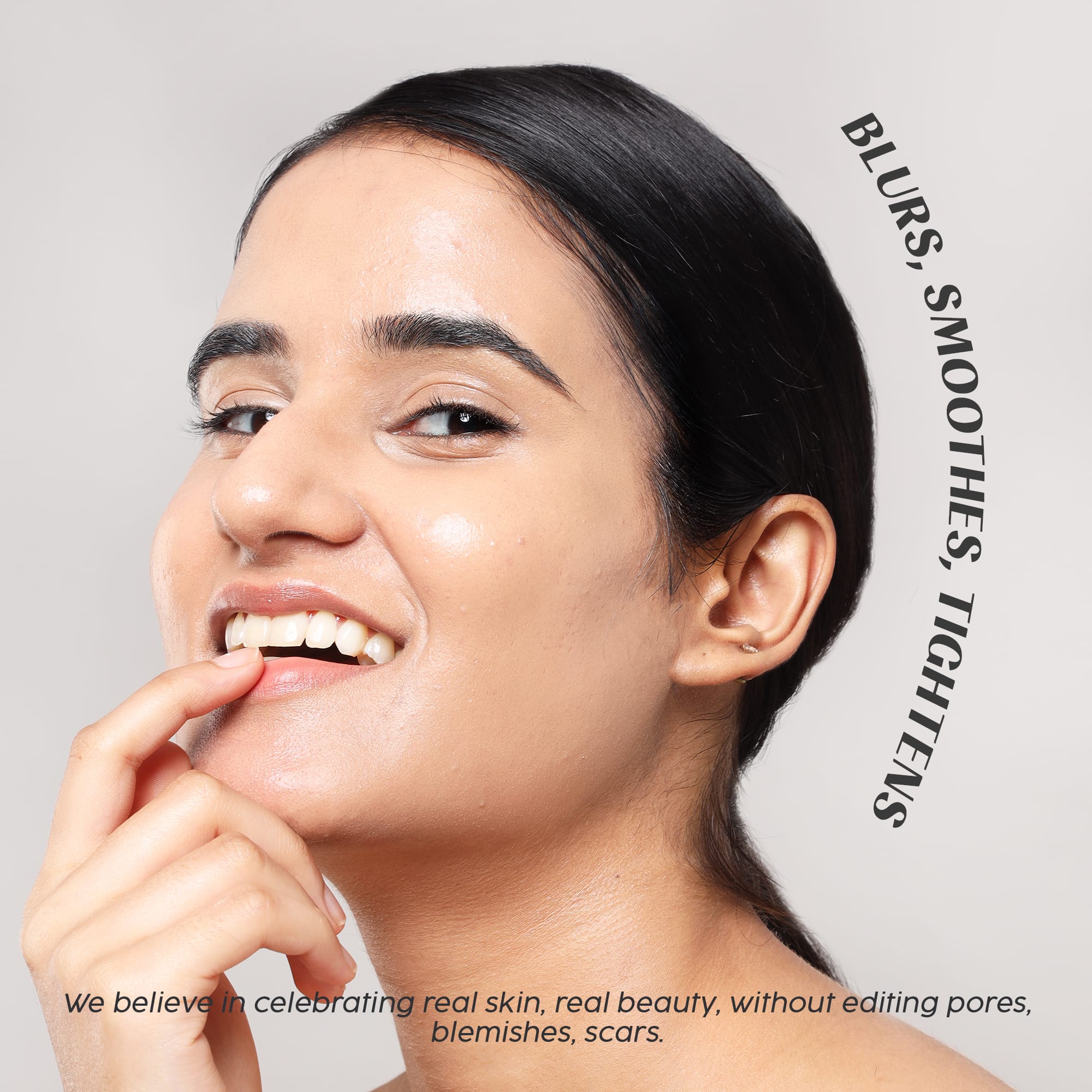
Walk into any pharmacy in India, and you will find foundations, skin tints, BB creams and concealers all claiming to offer SPF protection. It sounds like a convenient two-in-one: get your coverage and your sun protection in a single step. But dermatologists have been saying for years that SPF in makeup is not enough protection on its own. And for Indian skin specifically, with our climate and our particular vulnerability to hyperpigmentation and uneven tanning, this matters more than most people realise.
This guide explains exactly what SPF in makeup does and does not do, what Indian skin actually needs from sun protection, and how to layer sunscreen with your skin tint or foundation without pilling, tackiness or a white cast.


Why Indian skin needs sunscreen more than most
A common misconception is that darker Indian skin has enough natural melanin to skip sunscreen. Melanin does provide a very small degree of natural UV protection, roughly equivalent to SPF 2 to 4. This is far too low to substitute for actual sunscreen.
What melanin does not protect against is post-inflammatory hyperpigmentation, which is one of the most common skin concerns in India. When Indian skin is exposed to UV radiation without protection, the result is rarely a burn. Instead, it is tanning, uneven tone, stubborn dark patches and melasma, all of which are notoriously difficult to treat once they develop.
India's UV index is also among the highest in the world. In cities like Mumbai, Chennai and Delhi, UV radiation reaches high to very high levels for most of the year. Cloud cover and indoor work do not eliminate exposure: UVA rays penetrate glass and cloud, meaning your skin is being damaged even sitting near a window.
What SPF in makeup actually does (and does not do)
Foundations, BB creams, skin tints and other base products that include SPF do provide some UV protection. But there is a critical limitation: the amount of product you would need to apply to achieve the stated SPF level is far more than anyone actually uses.
Adds a small, supplementary layer of UV protection on top of your real sunscreen.
Replace a dedicated sunscreen. You would need about seven times more product than you actually apply to hit the stated SPF.
Sun protection testing is done using a standardised amount of product per square centimetre of skin. In practice, a foundation with SPF 30 might offer protection equivalent to SPF 5 or 7 based on how people actually use it.
How to layer sunscreen with skin tint without ruining your base

The main reason people skip sunscreen under makeup is that it can pill, cause tackiness or leave a white cast. All of these are legitimate concerns for Indian skin. Here is how to avoid each one.
Avoiding white cast
Traditional mineral sunscreens with zinc oxide or titanium dioxide can leave a white or grey cast on medium to deep Indian skin tones. This is the most common SPF complaint for Indian skin.
- Use a chemical sunscreen (sometimes called organic sunscreen), which absorbs into the skin without leaving visible residue. Chemical sunscreens with ingredients like avobenzone or tinosorb are generally invisible on Indian skin.
- Choose tinted sunscreens if you prefer mineral options. Many Indian brands now offer tinted mineral sunscreens in warm or golden shades that suit Indian undertones.
Avoiding pilling
- Apply sunscreen as the last skincare step and wait two to three minutes for it to set before applying any makeup.
- Use a lightweight, fast-absorbing formula. Thick, creamy sunscreens are more likely to pill under makeup. Gel-based or fluid sunscreens absorb quickly and create a smooth base.
Keeping skin tint finish intact
A common concern is that sunscreen will affect the finish of the Face Anything Luminous Skin Tint. The good news: the skin tint's formula is designed to be applied over a skincare-forward base, including sunscreen. Apply sunscreen, let it absorb fully, then apply the skin tint normally with your fingers. The finish will not be affected.
The right SPF level for Indian skin
For indoor days and commuting. Blocks about 97 per cent of UVB rays when applied correctly.
For extended time in direct sunlight. Blocks about 98 per cent of UVB rays.
PA rating (Protection Grade of UVA) is printed on Indian and Asian sunscreens. Look for PA+++ or PA++++ for meaningful UVA protection, which is specifically what prevents hyperpigmentation and tanning in Indian skin.
For most Indian women with an average day of a commute, indoor work and occasional outdoor exposure, SPF 30 PA+++ applied correctly and generously is sufficient.
How to apply sunscreen correctly under makeup
Many people who think sunscreen does not work are actually applying too little, or applying it at the wrong point in their routine. Here is the right method:
- Cleanse and moisturise first. Sunscreen goes over moisturiser.
- Use two finger lengths of sunscreen (one finger length each from the index and middle finger) to cover your face and neck. Most people use a fraction of this amount.
- Apply evenly over the whole face, neck and ears. Ears and the back of the neck are commonly missed and commonly show sun damage on Indian skin first.
- Wait two to three minutes before applying skin tint or foundation. This prevents pilling and allows the SPF ingredients to activate.
- Apply the Face Anything Skin Tint over the sunscreen using fingers or a sponge as normal. The tint layers seamlessly over an absorbed sunscreen base.
Reapplying SPF over makeup during the day
Dermatologists recommend reapplying sunscreen every two hours when you are outdoors. For people wearing makeup, this is where things get practical. You cannot reapply a full layer of sunscreen over a finished makeup base without disrupting it. Your options:
- SPF setting spray: A lightweight sunscreen-containing setting spray can be misted over makeup. It does not give full SPF protection but provides meaningful supplemental protection.
- SPF powder: Pressed or loose setting powders with SPF can be dusted over makeup. Same caveat as setting spray: supplemental, not primary.
- Staying in shade and covering up: For long outdoor days, physical protection (hat, sunglasses, shade) combined with your morning sunscreen is more effective than trying to layer SPF over makeup throughout the day.
For most indoor days, a well-applied SPF 30 in the morning is sufficient.
SPF in skin tints specifically: what you need to know
The Face Anything Luminous Skin Tint is not a sunscreen. It is a skin-enhancing base product. Like most skin tints and foundations, it may contain some SPF as an ingredient, but this is not its primary function and should not be relied on as your sun protection layer.
The correct routine is simple:
The skin tint enhances your skin appearance. The sunscreen protects it.
The skinification of makeup: why SPF awareness matters more now
In late 2025, India introduced standardised SPF testing protocols through the Bureau of Indian Standards, bringing Indian sunscreen regulation in line with global standards. This means consumers now have more reliable SPF claims on products, but also that the gap between SPF-in-makeup and dedicated sunscreen is even clearer.
The trend toward skinification of makeup (products that do both) is real and growing in India. But for sun protection specifically, the science is clear: you need a dedicated SPF product applied correctly to achieve meaningful protection. Makeup with SPF is a backup, not a plan.
FAQs: SPF in makeup for Indian skin
Is the SPF in my foundation or skin tint enough for Indian skin?
No. The SPF in makeup products would require you to apply seven times more product than normal to achieve the stated protection level. Always apply a dedicated sunscreen underneath your makeup.
Will sunscreen cause a white cast on my Indian skin?
Chemical sunscreens generally do not leave a white cast on Indian skin. Mineral sunscreens (with zinc oxide or titanium dioxide) can leave a grey or ashy cast. Look for tinted mineral sunscreens or switch to a chemical SPF formula.
How do I apply sunscreen under a skin tint without pilling?
Apply sunscreen as the last step of your skincare routine, wait two to three minutes for it to absorb fully, then apply the Face Anything Skin Tint on top with fingers. Pilling happens when the sunscreen is not fully absorbed before you apply the product on top.
What SPF do I need for Indian skin?
SPF 30 with PA+++ or PA++++ is the minimum for daily use in India. SPF 50 for days with prolonged outdoor exposure. Always look for broad-spectrum coverage, meaning protection against both UVA and UVB rays.
How do I reapply sunscreen over makeup?
The most practical options for reapplication over makeup are an SPF-containing setting spray or an SPF powder. Neither provides full protection on its own, but they supplement your morning application for an average indoor day.
Protect and enhance: the right order for Indian skin
Sunscreen is the most important step in any Indian skincare and makeup routine. Apply it every morning, apply enough of it, and then layer the Face Anything Luminous Skin Tint on top for a finish that enhances your skin rather than just sitting on it.


Shop: Face Anything Skin Tints | Full Face Collection
Read more: Skin Tint vs Foundation for Indian Skin Foundation vs Skin Tint vs BB Cream