


June 2026 · Makeup Guide
How to Cover Dark Circles on Indian Skin: Corrector, Concealer & Technique
Most concealers are made for cooler, lighter complexions. On Indian skin they oxidise, shift tone, and fail right where you need them most. Here is exactly how to fix dark circles — the right corrector shade, the right concealer, and the technique that actually holds up.
In This Guide
Why Dark Circles Are So Common on Indian Skin
Indian skin has more melanin than lighter skin tones, which means it responds differently to inflammation, sun damage, and hormonal changes. When the delicate under-eye skin experiences any of these triggers, melanocytes go into overdrive and create persistent pigmentation. Dark circles on Indian skin tend to be brownish or purplish — deeper and more stubborn than what most Western beauty products are designed to address.


- Post-inflammatory pigmentation: Irritation near the eye — rubbing, allergies, contact lens use — can trigger pigmentation that lingers for months.
- Sun exposure: India has one of the highest UV indexes in the world. Under-eye skin is thin and repeated exposure causes melanin deposits.
- Lack of sleep and stress: Reduced circulation makes blood vessels more visible through thin under-eye skin.
- Genetics: In many Indian families, dark circles appear in childhood and stay through adulthood regardless of lifestyle.
Step 1: Colour Correct Before You Conceal
This is the step most people skip — and the main reason their concealer fails. Dark circles on Indian skin usually have a brownish, purplish, or blue-grey undertone. A concealer alone cannot fully neutralise this. You need a colour corrector first.
Apply the corrector in a thin layer using your ring finger or a small brush, just over the darkest part of the circle. Tap gently — do not rub. Let it settle for 30 seconds before applying concealer.
Which Corrector Shade for Your Dark Circles?
The right shade depends on both your skin tone and the depth of your dark circles.
Fair to Light Indian Skin
Dark circles tend to look bluish or purplish. A light peach corrector neutralises the blue and creates a clean canvas for concealer.
HOM pick: Spot On Corrector in Light Peach
Wheatish to Medium Indian Skin
Dark circles look brownish with a reddish or purple edge. A peach corrector works well here — it bridges the gap between the skin's warm base and the cooler darkness.
HOM pick: Spot On Corrector in Peach
Tan to Dusky / Deep Indian Skin
Dark circles appear very deep brown or grey-brown. An orange corrector is the most effective choice. It looks alarming on application but disappears completely under concealer.
HOM pick: Spot On Corrector in Orange


Step 2: Pick the Right Concealer Shade
For dark circles specifically, choose a concealer one to one-and-a-half shades lighter than your skin tone. Going more than two shades lighter creates a flashback effect in photos and looks unnatural in real life. Undertone matters as much as depth.
- Fair to light Indian skin: Yellow or warm peach undertone. Avoid pink or white bases — they look ashy on warm Indian skin. Try Zoom In Concealer in FL01.
- Wheatish to medium Indian skin: Warm beige or golden-yellow undertones. A shade that reads slightly warm, not neutral or pink. Try Zoom In Concealer in MD01.
- Tan to dusky / deep Indian skin: Warm brown undertones, not grey or cool beige. Avoid anything with an ashy finish. Try Zoom In Concealer in D01.


Step 3: Choose the Right Formula for Indian Climate
The under-eye area is prone to creasing, especially in Indian heat. A heavy concealer settles into fine lines by afternoon.
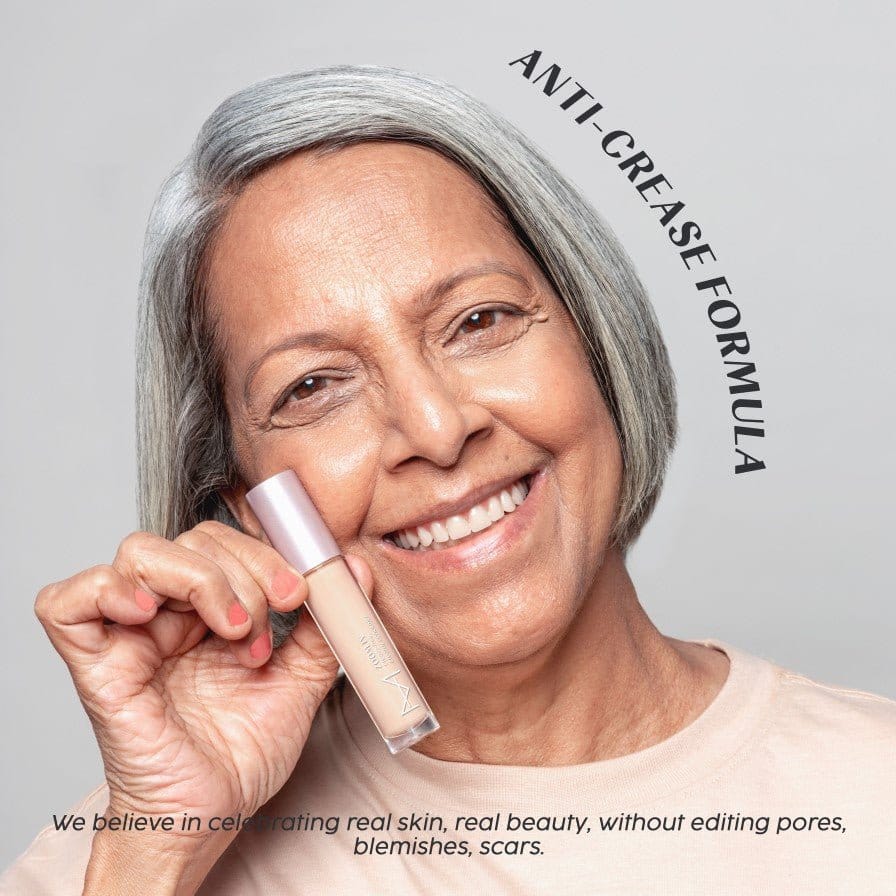
- Creamy liquid concealers (like the Zoom In range) are the best balance of coverage and wearability. Enough pigment to cover dark circles without being so thick that they crease.
- Full-coverage stick concealers can work for very deep dark circles, but need to be set thoroughly with powder and used with a light hand.
- Avoid powder concealers under the eyes. They emphasise dryness and fine lines, and do not offer the coverage most Indian dark circles require.
Step 4: Application Technique That Actually Works
- Prep with eye cream first. Apply a thin, fast-absorbing eye cream and let it sit for two minutes. Dry under-eye skin grips concealer and causes caking.
- Apply skin base first. If using a Face Anything Skin Tint, apply that before concealer so the two products blend seamlessly at the edges.
- Corrector then concealer. Corrector first, allow it to set for 30 seconds, then concealer on top. Use the ring finger for both — it applies the least pressure.
- Triangular application. Draw an inverted triangle from the inner corner down to the cheek. This brightens the whole mid-face, not just the eye socket.
- Pat, never rub. Patting presses product into skin. Rubbing removes it and causes pilling.
- Set with a tiny amount of translucent powder. Use a small fluffy brush and dust minimally under the eye only. Too much looks cakey; too little and the concealer creases by noon.
Real-Life Scenarios
Quick weekday morning: Apply Face Anything Skin Tint, spot-apply peach corrector over dark circles, top with Zoom In Concealer, set lightly. Done in four minutes.
Special occasion / wedding: Apply corrector, let it set, then build concealer in two thin layers rather than one heavy application. Set with setting spray and use blotting papers later rather than powder touch-ups.
Sensitive skin: Skip heavy eye cream. Use the Face Anything Skin Tint as a sheer base, correct with light peach, and apply a creamy concealer. Avoid fragranced products near the eye area.
Common Dark Circle Concealer Mistakes on Indian Skin
Going too light. A concealer three shades lighter creates a white half-moon under the eye. Stay within one to one-and-a-half shades.
Skipping the corrector. Concealer alone cannot neutralise deep brownish or purplish dark circles on Indian skin. Corrector is not optional.
Applying concealer before skin base. This causes concealer to sit on bare skin and never blends properly with the rest of the face.
Over-powdering. Setting the entire under-eye area with too much powder creates a cakey finish that photographs badly.
Wrong undertone. A grey or pink-based concealer on warm Indian skin makes dark circles look more visible, not less.
Frequently Asked Questions
Which is the best concealer for dark circles for Indian skin?
The Zoom In Crease Free Creamy Concealer range is formulated specifically for Indian skin tones. Pair it with the appropriate Spot On Corrector for your skin tone for the best results.
Should I use a peach or orange corrector for dark circles?
Fair to medium Indian skin generally needs a peach corrector. Deeper Indian skin tones need an orange corrector because the darkness is more stubborn and peach does not have enough intensity. When in doubt, start with peach — if dark circles are still visible after concealer, that's a sign you need orange.
How do I stop my concealer from creasing?
Moisturise the under-eye area before concealer, apply in thin layers, and set with a minimal amount of translucent powder using a small fluffy brush. Avoid heavy cream concealers in summer.
Can I use a skin tint instead of foundation under concealer?
Yes, and this often looks better. Apply the Face Anything Skin Tint first for an even base, then apply corrector and concealer over it. Concealer blends more naturally into a skin tint base than a heavy foundation.